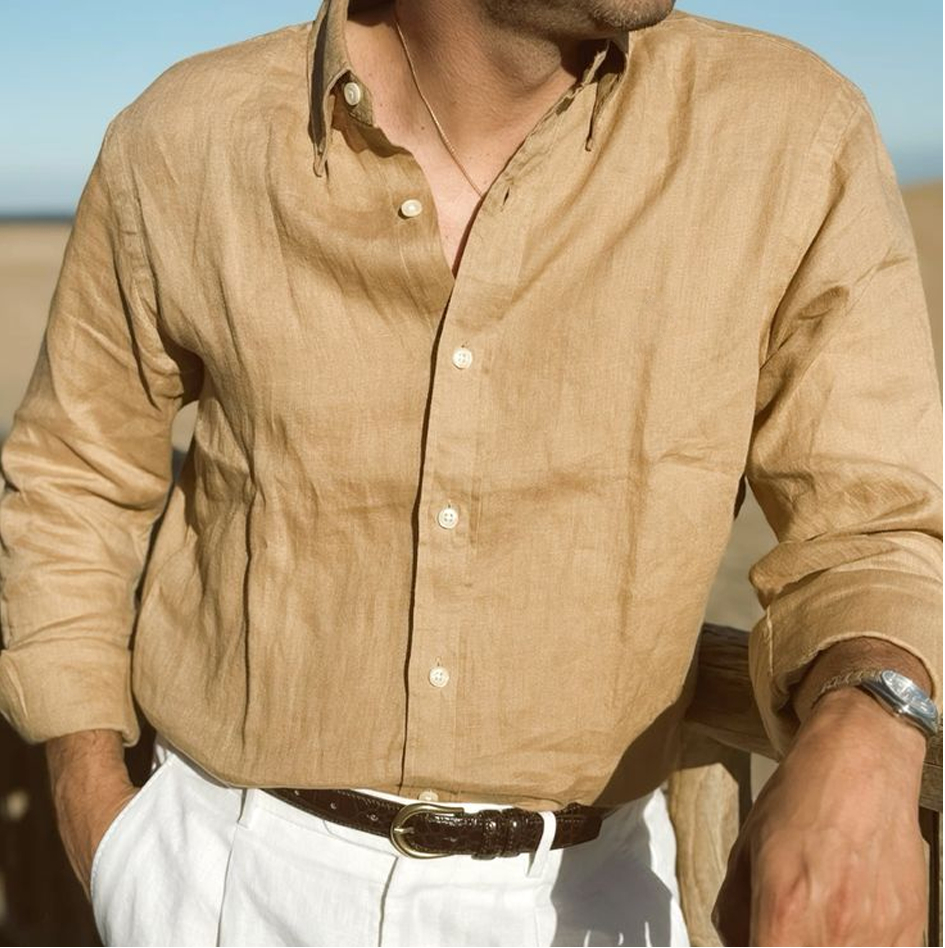
How designers see colour, proportion, silhouette, texture, movement and culture differently.
A designer does not simply look at a garment.
They look at what it could become.
A length of cloth is not just fabric. A colour is not simply a colour. A silhouette is not merely a shape. In the hands and imagination of a designer, each becomes part of a larger visual language—one that speaks about a particular time, place, culture and way of living.
This is perhaps the most fascinating quality of fashion: the same world can be seen differently through a designer’s eye.
Colour Is Never Just Colour
To most of us, blue is simply blue.
To a designer, it can be the blue of Mediterranean water, faded denim, evening shadows, painted shutters or an old ceramic tile.
Colour carries memory.
It can suggest a season, a mood, a culture or an attitude. Designers often build entire collections around these associations, combining unexpected shades to create a particular emotional landscape.
A palette can be quiet or dramatic, nostalgic or futuristic.
Sometimes, the most sophisticated colour story is the one that barely announces itself.
Proportion Creates Presence
Before noticing the details of a garment, we notice its proportions.
Where does the shoulder end?
How long is the jacket?
Where does the waist sit?
How much volume surrounds the body?
Designers understand that changing one proportion can completely alter the character of a silhouette.
A longer jacket can feel relaxed and architectural. A higher waist can elongate the body. An oversized shoulder can introduce authority, while a softer line can create ease.
Proportion is the invisible architecture of fashion.
Silhouette Speaks First
A silhouette is what remains when all the details disappear.
Imagine a garment reduced to a shadow.
You may still recognise whether it is sharp or fluid, structured or relaxed, minimal or dramatic.
That is the power of silhouette.
Designers continually reinterpret the relationship between the body and clothing—sometimes following its natural contours, sometimes exaggerating them, and sometimes deliberately challenging them.
The silhouette becomes a designer’s signature.
Texture Gives Fashion a Sense of Touch
Fashion is visual, but great design is rarely only visual.
Texture allows us to almost feel a garment before touching it.
A smooth surface reflects light differently from a rough one. A crisp fabric holds a different shape from a fluid fabric. A heavy cloth creates structure; a lighter one creates movement.
This is why designers consider material alongside silhouette.
A beautiful shape in the wrong fabric can lose its character.
The right fabric can make an otherwise simple shape extraordinary.
Movement Brings the Design to Life
A garment hanging on a mannequin tells only half the story.
The other half begins when someone moves.
A sleeve follows an arm.
A skirt responds to a turn.
A jacket opens as someone walks.
A fabric catches the wind.
Designers therefore think beyond the static image. They imagine how clothing behaves in motion, in light and in real life.
A successful garment does not simply look beautiful.
It moves beautifully.
Culture Is the Invisible Inspiration
Few designers create in isolation.
Architecture, cinema, music, travel, art, history, politics, street culture and everyday life all enter the creative vocabulary of fashion.
A designer might find inspiration in a Renaissance painting, a brutalist building, a coastal village or the way people dress in a particular city.
Culture gives fashion context.
And fashion, in turn, becomes a way of recording culture.
This is why certain garments feel inseparable from the era in which they were created.
The Fabric Changes the Idea
Perhaps the most important decision happens before the garment even exists.
What should it be made from?
The answer can completely change the design.
A structured wool can transform a relaxed silhouette into something architectural. Silk can introduce fluidity. Denim can give the same form a sense of familiarity. Linen can soften tailoring and bring an effortless relationship with the body.
The designer therefore doesn’t simply design with fabric.
They design through it.
Seeing What Others Don’t
This is ultimately what distinguishes a designer’s eye.
It is the ability to look at something familiar and imagine it differently.
A colour becomes a palette.
A piece of fabric becomes a silhouette.
A building becomes a collection.
A historical reference becomes something contemporary.
A simple movement becomes a design detail.
The designer observes the world—and then edits it.
Not everything needs to be added.
Sometimes, great design comes from knowing what to leave out.
The Eye Behind the Garment
Fashion often celebrates the finished creation.
But behind every memorable garment is a series of decisions that may never be visible:
Why this colour?
Why this length?
Why this fabric?
Why this proportion?
Why this detail—and not another?
The answers reveal something deeper than aesthetics.
They reveal a point of view.
And perhaps that is the essence of a designer’s eye:
not simply seeing what exists, but recognising what could exist.